
Stop selling your product. Start giving people a reason to imagine it.

How to sell any product with storytelling, and why it matters now more than ever.
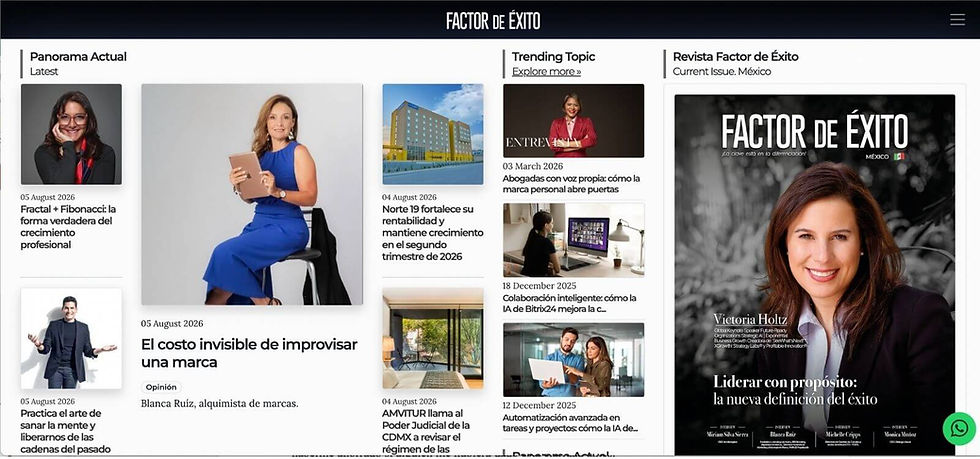
Blanca Ruíz, Brand Alchemist
BRS Branding Studio www.brsbranding.com / Sep 2026
Brand and Identity Design, Brand Consultant

Just recently, someone reached out to me about a possible synergy with a business summit. They wanted me to share my client list to help them find sponsors.
Before answering, I did what I always do before committing to anything: I went and looked into it. I searched for the event on a specialized events platform. The ticket cost more than 300 euros a day.
And that's where I got stuck. Not on the price. On the fact that I had no idea why anyone would pay that.
The imagination gap.
There was nothing to tell me what an attendee would actually experience. Nothing that let me picture the event, the conversations, the kind of people who'd be in the room. Just an event name and a high price tag, with no story behind it to hold it up.
I assumed their sponsorships would cost just as much. And with nothing to build my confidence, I couldn't share my client list. I had no way of knowing what my clients would actually get out of that investment.
I call that the imagination gap: the distance between what your product is actually worth, and what someone who's never experienced it can picture.
It's a silent problem, because nobody tells you to your face. People just don't share, don't buy, don't respond, and you end up thinking the problem was the price, when really it was that they could never picture themselves in there.
And here's the part that's hardest to accept: no amount of "spend more on promotion" closes that gap.
And it's not exclusive to a 300-euro-a-day summit. The same thing happens to a small coffee producer selling a 200-peso bag. The scale changes. The gap doesn't.
I didn't need someone to walk me through the full agenda. I needed one thing: a clear answer to what makes this product special?
That question is the same for any business, whether it's a 300-euro-a-day summit or a 200-peso bag of coffee. The scale changes. The question doesn't.
And that answer is never generic. It's not "quality," it's not "a unique experience," it's not "we're different."
It's something specific enough that only that product, that founder, that story, could say it.
In the summit's case, it would have been enough to know what specific conversation I'd have there that I couldn't have anywhere else.
In the coffee's case, it's the exact reason that bean, that process, that harvest, is different from the fifteen others in the same scroll.
The mistake isn't not having a story. The mistake is answering that question with generalities that any competitor could say too.
Why this is, at its core, a brand problem, not a marketing problem.
Here's what almost never goes missing: the answer to that question, right when it's needed.
Somewhere in their deck, they've probably already defined why their summit matters and why it justifies that price. That clarity exists. The problem is it never leaves the building.
Because from where I stood, I saw none of that. No preview, no promise, nothing that made me want to know more in that first contact. And when that happens, you don't wait around for a better explanation. You close off. I automatically lost interest, and above all, lost trust.
We live in the attention economy today. Nobody owes you their time. In that first contact, your job isn't to explain everything. It's to spark enough curiosity that the person decides to give you a few more minutes of their attention, and wants to find out what comes next on their own.
That's the most common mistake I see: the company thinks its problem is marketing, when really, they've never translated what's already clear in their own head into something an outsider can feel in the first few seconds.
And paid marketing doesn't fix it, it makes it worse.
The worst part is that the solution most people reach for is more of the same. The same generic paid ad on Meta or Google, which doesn't tell me anything either, and ends up leading me to the exact same place: download a deck, request a pitch deck.
And that's where you have to ask yourself: why would I want that pitch deck? I still don't know if I even want this in my life. There's a real aversion to being flooded with attachments, with emails from someone you're not even sure you're interested in. Sending someone a full PDF before they've felt any real curiosity is asking for a commitment they haven't earned yet.
Paid advertising doesn't fix the underlying problem. It just puts more budget on top of it.
The methodology that works for any product: brand storytelling.
That question, why should anyone care about this, and why should they pay, gets answered with a story. And every story that truly connects rests on the same structure, whether it's a movie, an ancient myth, or the video for a summit.
There's a character. That character wants something. Something stands in their way, and that character needs something else in order to be transformed.
That's where two more parts come from, the ones that actually create the emotional connection: what the character truly needs, which is almost never the same as what they think they want at first, and the transformation they go through at the end, when they finally get what they needed.
Character. Desire. Obstacle. Need. Transformation.
Applied to a brand, this stops being abstract very fast:
The character is your customer, not your product.
The desire is what they think they're looking for.
The obstacle is what's holding them back today, that doubt, that fear, that lack of time or trust.
The need is what's actually going to change in their life or their business if they choose you.
And the transformation is proof that this change has already happened to someone else before them.
When your communication is missing any of these five elements, it doesn't tell a story, it delivers information. And information doesn't close the imagination gap. The transformation of a real person does.
Finding your brand's specific answer, and translating it through this structure, isn't intuition or luck. It's exactly what good brand strategy does.
Coffee that looks just like everyone else's isn't a quality problem
Going back to coffee, just to name a product, though this is really the case for every product.
A lot of small producers have a genuinely good product. The coffee itself isn't the issue. But when you scroll past their pages, they all start to blur together: the same kind of photo, the same vague words, nothing that tells you why this bag is different from the fifteen others in the same feed.
The problem is the lack of methodology to find and tell the right story, the one that will actually connect with that premium niche we all want to reach.
Every product, without exception, has that something. That magic isn't in prettier packaging or a better-lit photo. It comes straight from the founder, from the real soul of the business.
The work isn't inventing that magic. It's having the right process to find it, and communicating it loudly enough that the person on the other side stops seeing "just another coffee" or "just another summit," and starts imagining,
connecting, in a creative and different way, actually living it.
This never gets solved once and for all. You'll always be someone new and unknown to someone. The imagination gap doesn't close once. It closes every time someone new shows up at your door.
The question you'd ask your own brand:
Does your brand already give people that reason to trust, or is it still relying on someone believing you blindly?
If that question makes you a little uncomfortable, you're not alone. It's the one I ask every client before we start any project together.
KEY TAKEAWAYS:
The imagination gap is silent. Nobody tells you "I didn't get your product." They just don't share it, don't buy it, don't ask more. The silence feels like rejection of the price, when really it's a lack of clarity.
Neither price nor promotion closes the gap. You can lower the ticket or raise the ad budget, and the problem stays exactly the same if no one can picture the real transformation you're offering.
The answer to "why should I care about this?" almost always exists, it just lives inside, not outside. The deck, the internal pitch, the founder's own head: that's where the clarity is. The work is bringing it out to that first contact, before you ask for their full attention.
Story is built with structure, not inspiration. Character, desire, obstacle, need, transformation. When any of these elements is missing, what you have is information, not a story that closes the gap.
SUSCRIBETE A MI CANAL:
Let´s build your brand
FREE QUIZ DISCOVER.
website
Does your brand already give people that reason to trust it, clearly enough that someone can feel it in the first few seconds?
Brand Readiness checklist:
Download the Brand Readiness Checklist, 20 questions to find out if your brand is ready to connect with someone new, and whether it communicates value.
Find out with this checklist if you're communicating value:
Whether you can explain, in a single sentence, what problem your product solves and why it should matter to your customer
Whether you know exactly who your product is for, and what makes them choose you over any other option
Whether your messaging makes clear why your product is worth what it costs, and what about it would be hard for a competitor to copy
Whether your story explains why your brand exists, and whether that story shows up the same way on your website, your social media, and every touchpoint
Whether your visual identity reflects the positioning you want, or whether someone who doesn't know you could understand what makes you different just by seeing it

Hola I am Blanca, let's work together!
I'm Blanca Ruiz, Brand Alchemist and founder of BRS Branding Studio.
Brand strategy and visual identity for Latin American companies entering the US market and Hispanic-owned businesses that need a brand that truly represents who they are.
26 years. Bilingual. You work directly with me.
The work speaks for itself:www.brsbranding.com



Comments